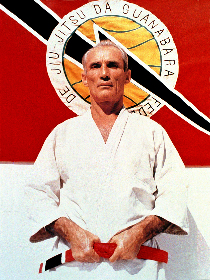
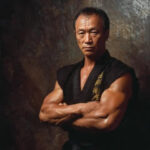
Let’s start with Helio Gracie, actually it’s often said the art was popularized by Helio and his brothers, particularly Carlos Gracie. Early Days
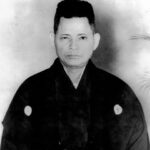
Helio Gracie, along with his brothers Carlos, Oswaldo, George, and Gastão, learned traditional Kodokan Judo from Mitsuyo Maeda (a Japanese judoka) in Brazil.
The Gracie family adapted Judo techniques to create a unique style focusing on grappling, ground fighting, and submission holds.
In the 1920s-1930s, Carlos and Helio Gracie began teaching this adapted style, which became known as Gracie Jiu-Jitsu (later Brazilian Jiu-Jitsu, BJJ).
Key Developments
Helio Gracie became a key figure in promoting BJJ, known for his challenge matches and ability to defeat larger opponents.
The Gracie family opened academies, with Helio’s academy becoming particularly influential.
In the 1990s, BJJ gained international attention through the Ultimate Fighting Championship (UFC), where Royce Gracie (Helio’s son) showcased its effectiveness.
Modern Era
BJJ spread globally, evolving into various styles and schools.
The art emphasizes technique over strength, making it accessible to practitioners of all sizes and backgrounds.
Today, BJJ is a popular martial art and sport, with competitions and academies worldwide.